Agents that act on real operations, not just answer questions.
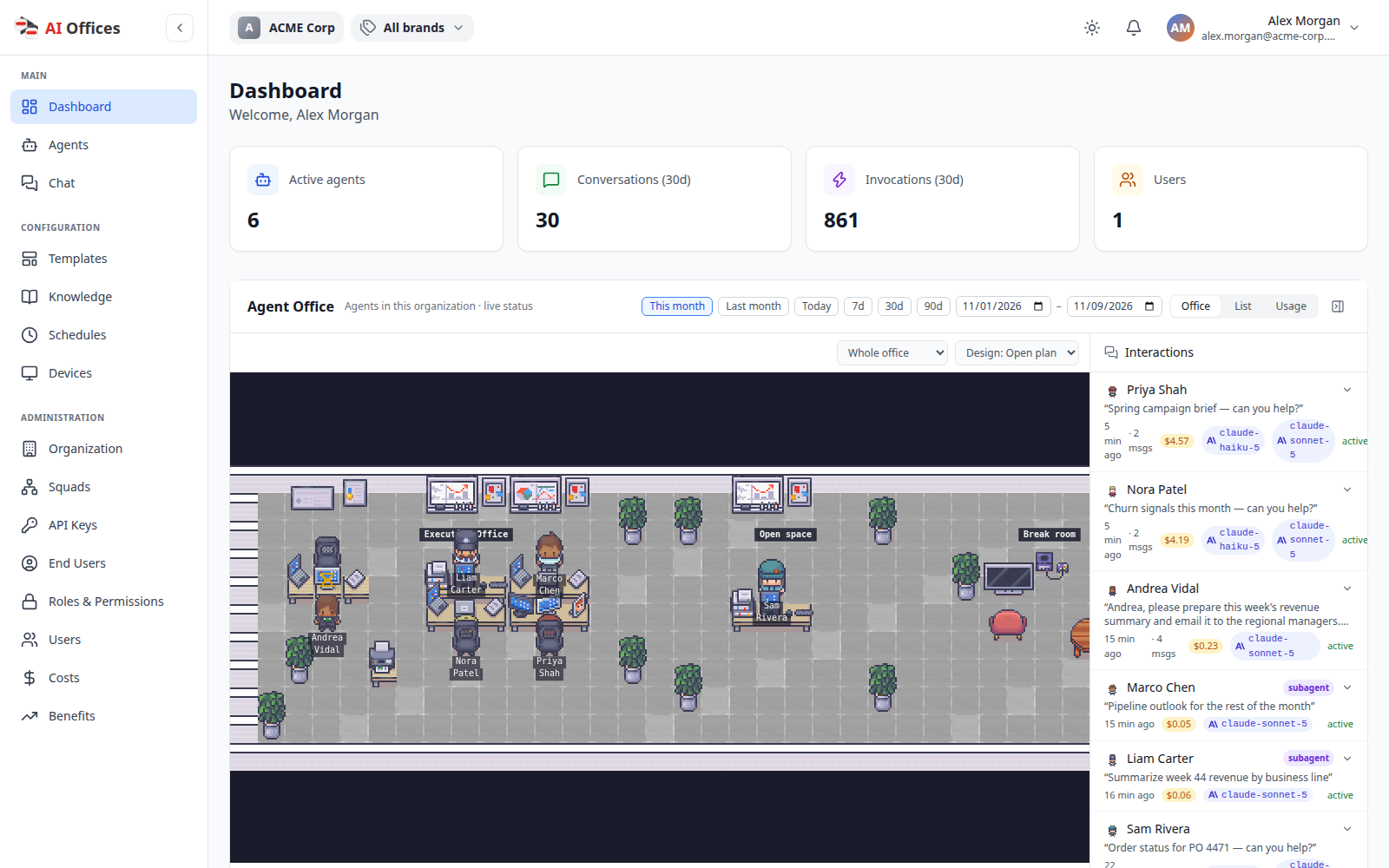
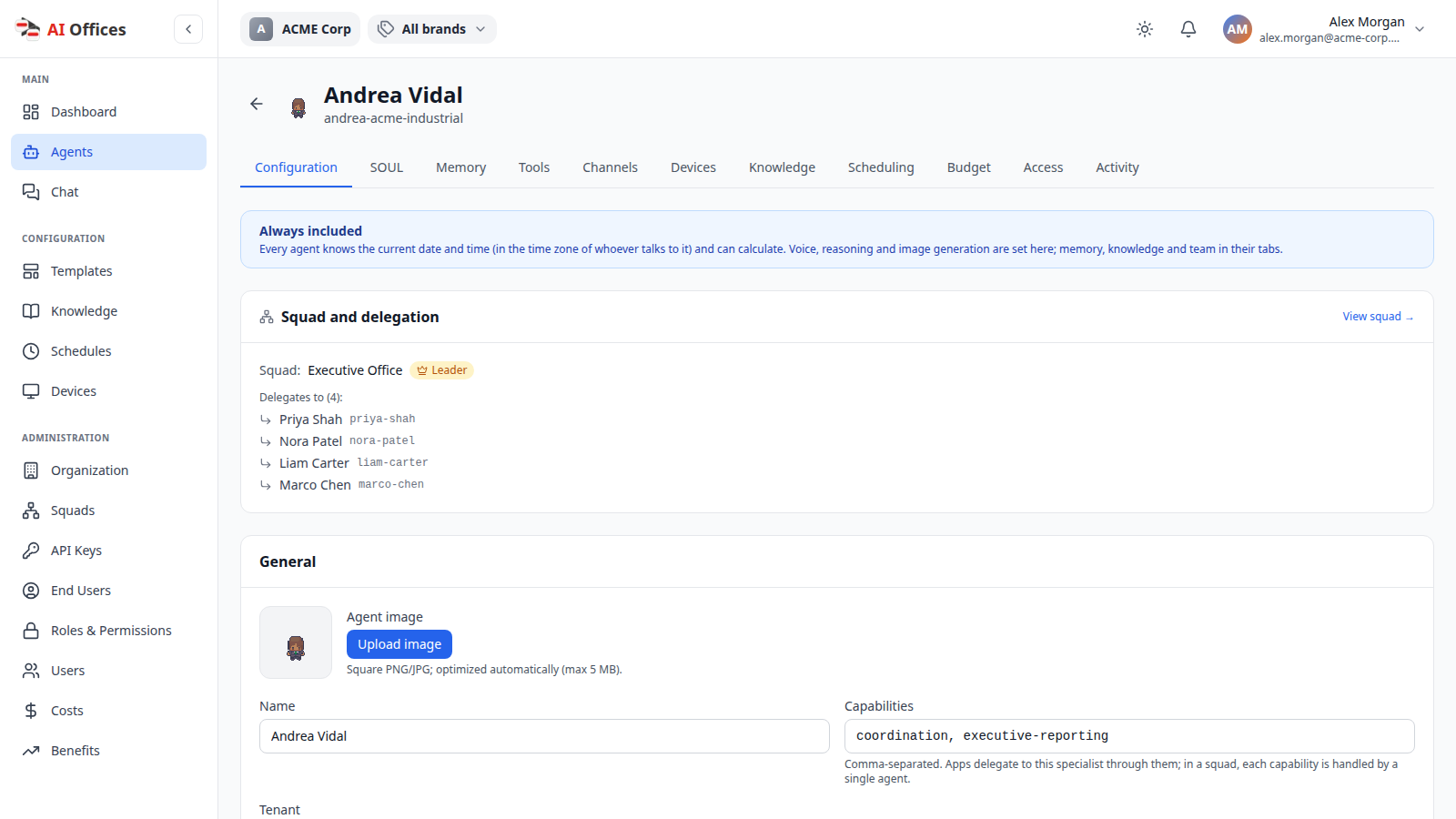
AI Offices is Buckler's multi-tenant agent platform, and I lead its engineering. It runs 160+ cloud AI agents in production, organised into 17 squads across 14 organizations, and serves Weblox, IT Ops and Work Balance as a shared AI service: a product asks for a capability, and the platform finds the right squad, runs the specialist on its model and bills the call.
What it changes for the business
- Work gets completed, not just answered.Agents act on the systems the company already runs — mail, calendar, files, tickets — so the output is a finished task rather than a suggestion to act on.
- Capacity that does not require headcount.A squad owns a business function end to end, which is what lets a small organisation carry the operating load of a much larger one.
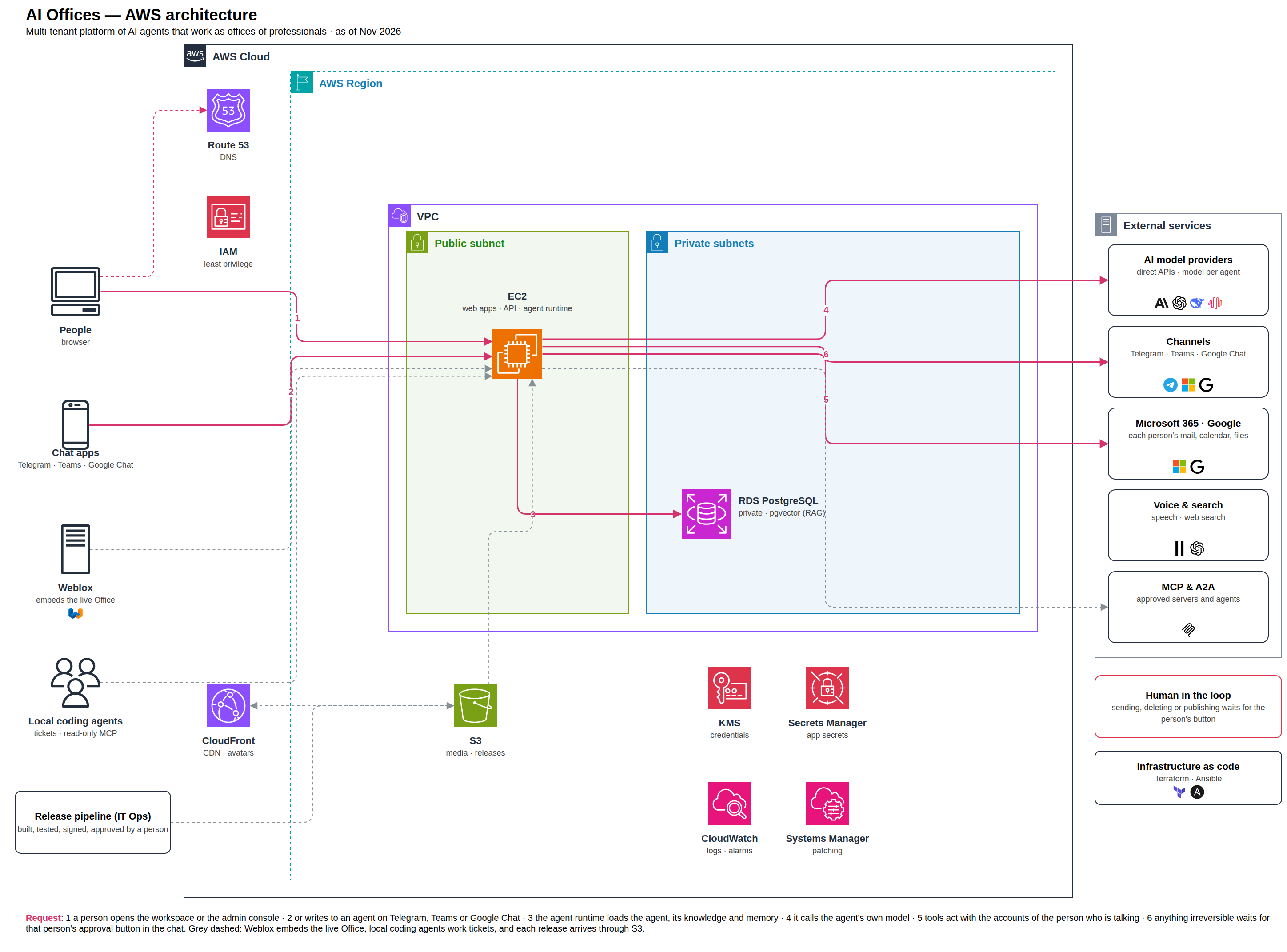
- No lock-in on a single AI vendor.Direct API access to four labs means each task runs on the model that suits it. A price rise or an outage at one provider is a configuration change, not a migration.
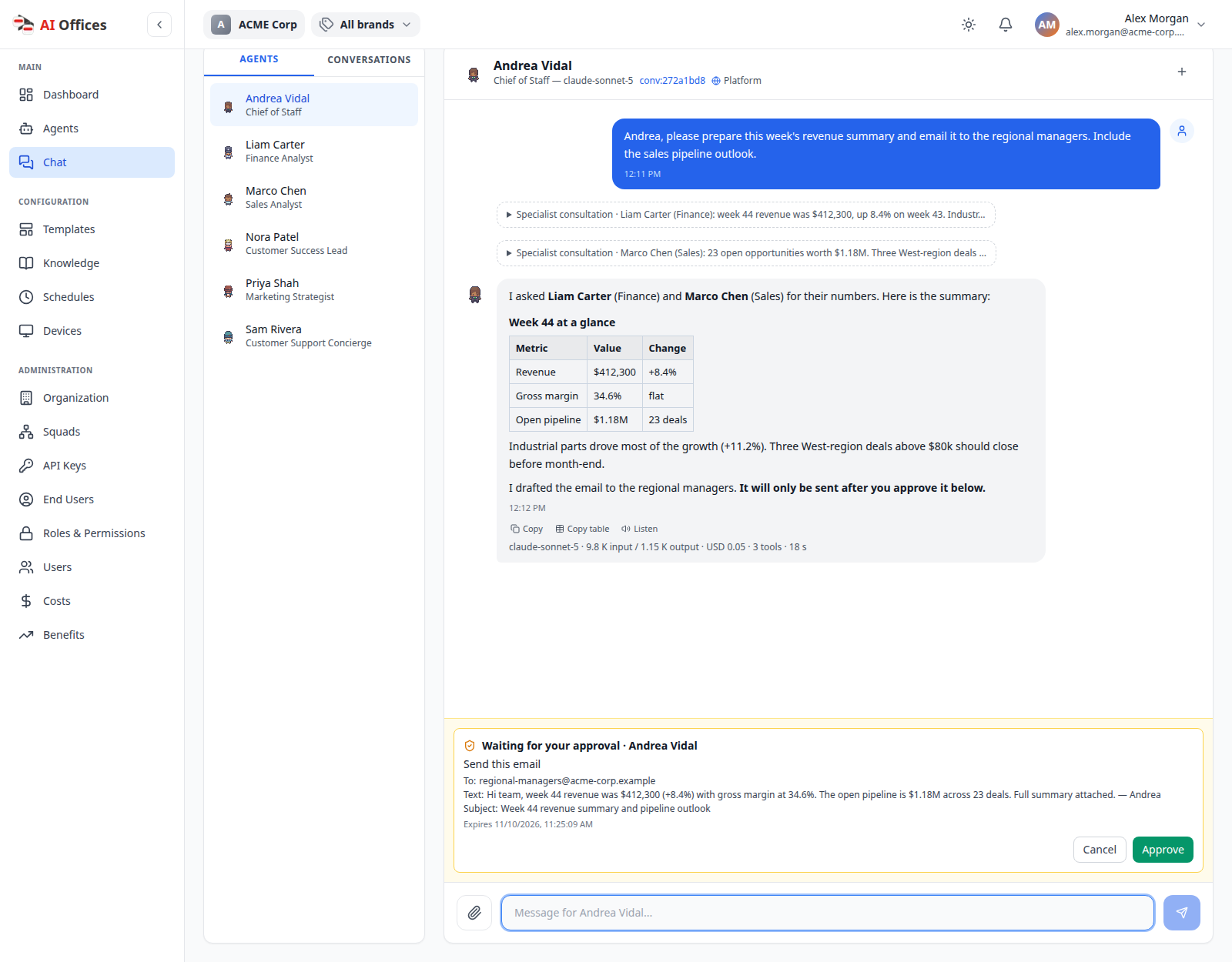
- Every action is attributable.Agents authenticate as the organisation, not through a shared account, so what they did can be audited and their access revoked like any employee's.
How it is built
- An AI-native, spec-driven SDLC.Local coding agents, one per repository and connected to our cloud agents through MCP, write the code from numbered requirements, domain models and API contracts written first.
- Tests that block the pipeline.Every failure that can be caught mechanically becomes a test that blocks the pipeline; agents have read-only production access and a person approves every deploy.
- In nine months.828 commits, about 207,000 lines of Python and TypeScript, 510 requirements and 383 test files.
Cost and quality, measured
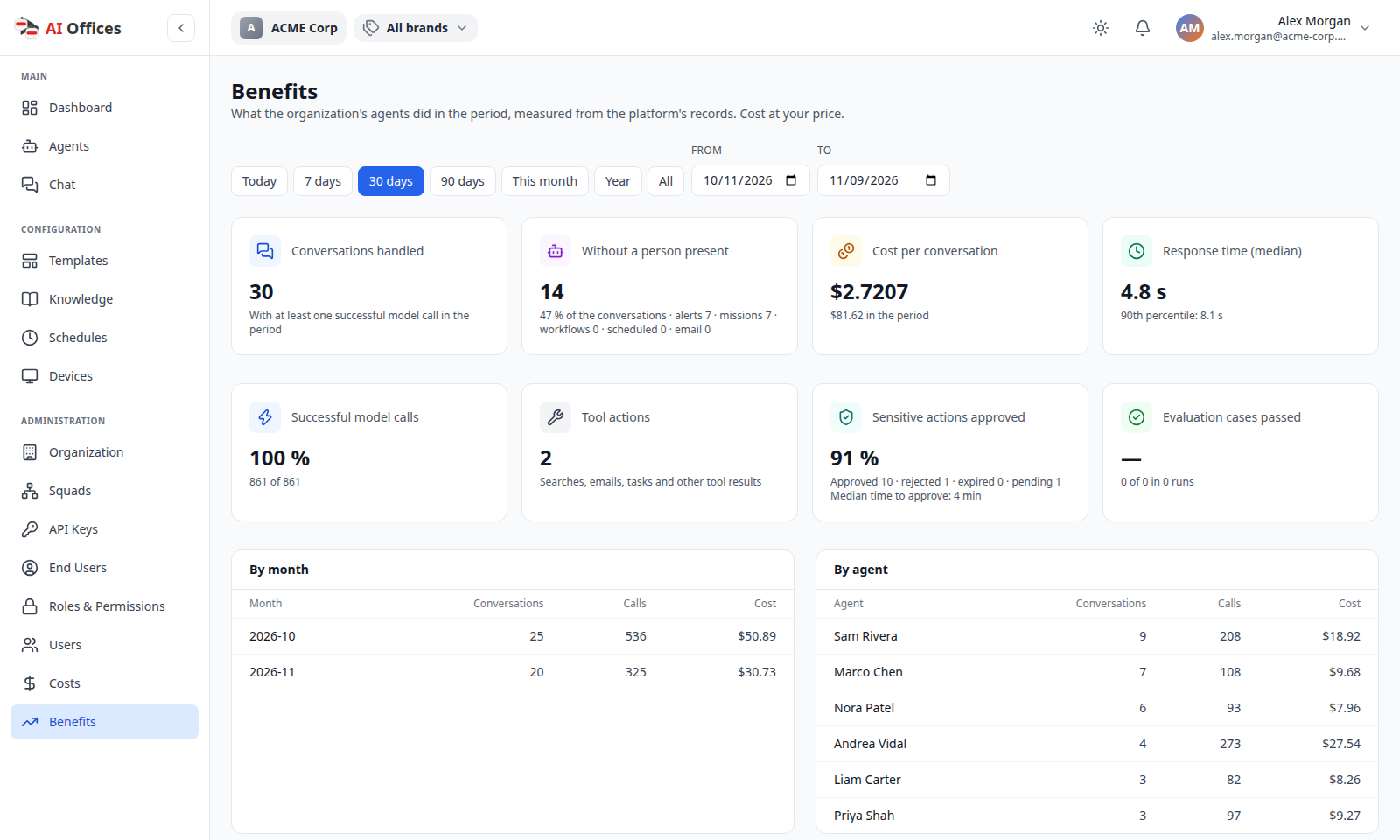
- About $0.07 per agent conversation.AI cost billed to the organization that used it.
- Typed outputs, failed loudly.Agent replies must satisfy one of about 30 structured-output models; a reply that does not is retried once and then fails visibly, never silently repaired.
- Evals on every model change.Golden cases captured from real conversations are replayed offline and scored by an LLM judge plus deterministic checks, repeated several times per case, whenever an agent's model changes.
- Cost is designed in.157 of 163 agents run on a lower-cost model.