Weblox

Digital Marketing Platform


Build stunning websites with intelligent block-based editing and AI-generated content.

Weblox

Empowering businesses to create professional websites without coding expertise.

Weblox is a digital marketing platform: a no-code builder for corporate websites with a built-in CRM, lead capture and cookieless analytics, so the site is not just published but worked. Agent orchestration runs on AI Offices, which assists with content generation and optimisation.


What it changes for the business

Platform

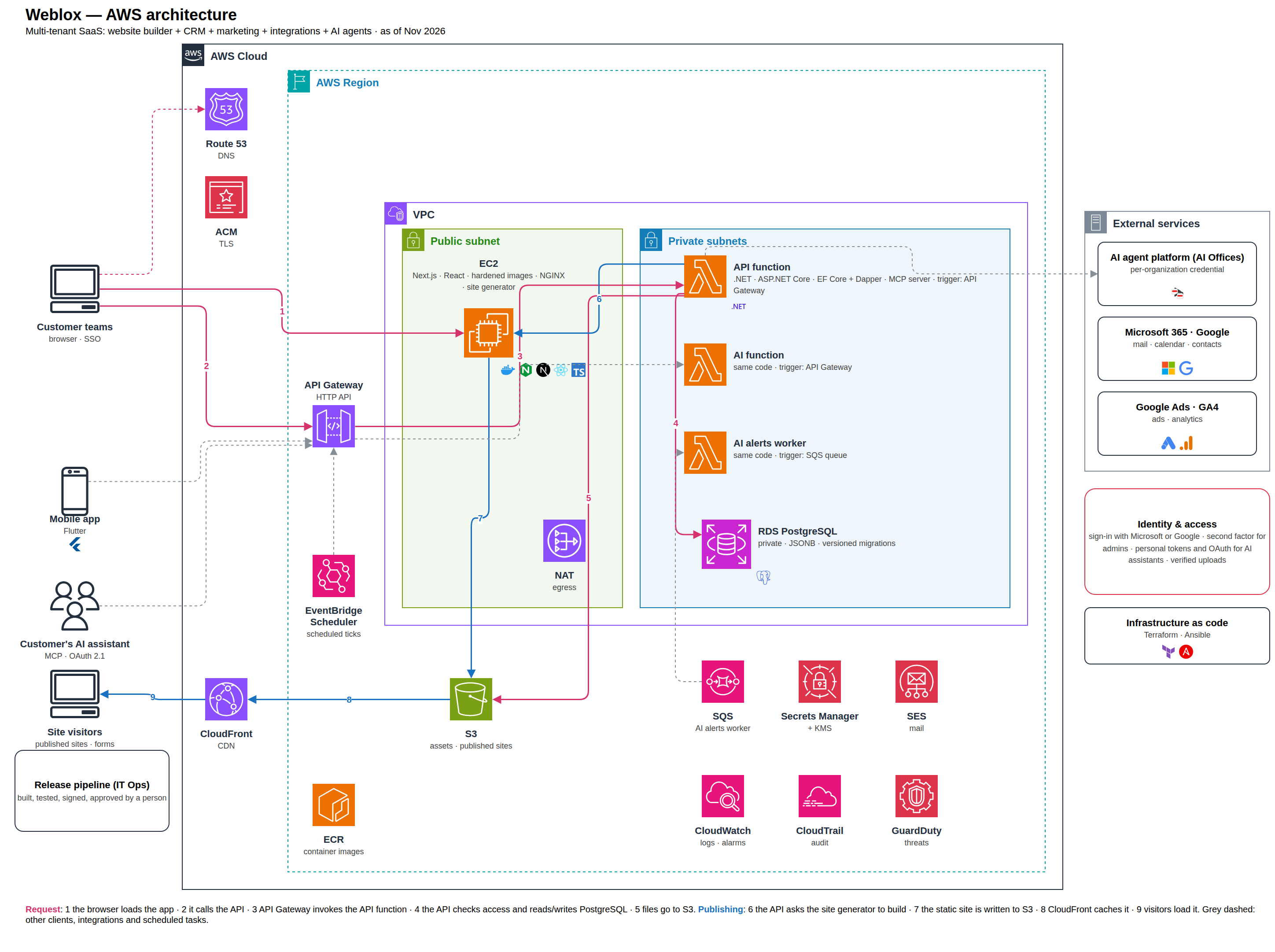
Weblox runs on AWS: the API on Lambda behind API Gateway, with SQS for asynchronous AI work; the web apps as Docker images in rootless Podman containers on EC2 behind NGINX; published sites as static files in S3, served from a CDN through CloudFront. On Google Cloud, translation runs on Cloud Translation so multi-language sites stay in sync, and the API sends mail through Google Workspace with keyless AWS-to-GCP workload identity federation: no service-account keys exist. The GCP projects are managed as code with Terraform, per environment.

AWS Google Cloud Linux

Language & Technology

The frontend is Next.js 16, React 19 and TypeScript, with real-time block editing, plus a Flutter mobile app. The backend API is .NET 10 with C#, following clean architecture with EF Core and Dapper, and exposes its own MCP server for coding agents.

React / Next.js

Database

Weblox uses PostgreSQL on Amazon RDS as its primary database, providing relational storage for organizations, websites, pages, block components and the CRM. Database migrations are managed with Flyway for version control and seamless deployments.


AI Integration

Weblox does not call AI models directly: it asks AI Offices for a capability (architect, concierge, CRM, content) and the organization's Growth squad answers, on its own model and budget. That powers site proposals the owner approves, a website concierge that answers visitors and captures leads, and CRM briefings. Visitor models retrain every 15 minutes behind a quality gate.

AI Offices

Agents and the Block Contract

Every page is composed from typed, versioned block templates (46 in production), checked by a contract validator with 13 blocking rules. Each placed block is pinned to its template version, so a block can evolve without breaking a page that is already live, and the editor's properties panel is generated from each template's typed fields. Two agents author against the same contract as people: the Architect composes every page from the catalogue and, when no block fits, the Block Designer designs a new one, which must pass the validator before it exists. Every page lands as a draft that a person approves; agents never publish. Agents can also copy a complete site with its blog, legal pages and images (one copy in production had 64 pages), propose logos from the brand's own colours, and suggest alt text in every language.


CI/CD & Infrastructure

Weblox is shipped by IT Ops: every release is built in isolation, scanned for vulnerabilities, approved by a person with a second factor and signed; the host verifies the signature before installing. Infrastructure is code with Terraform. Tests run with xUnit and Testcontainers, Playwright and Vitest.

IT Ops

Integrations

People sign in with Microsoft Entra ID or Google, with a TOTP second factor whose seed is protected by AWS KMS; agents use scoped JWT service tokens. Weblox connects to the systems a client already runs: Microsoft 365 and Google Workspace.

Microsoft 365 Google Workspace

Key Features

Block-Based Editor: drag-and-drop interface with typed, versioned block templates.
Agents that compose: site and page proposals, new blocks, logos and alt text, always approved by a person.
Multi-Tenant: organizations manage multiple websites with team collaboration.
AI by capability: content, proposals and concierge served by AI Offices, never by agent name.
Static sites from a CDN: published sites are fast and have no server to attack.
Verified files: uploaded documents and quote files are checked with SHA-256.

Inside Weblox


1 / 7
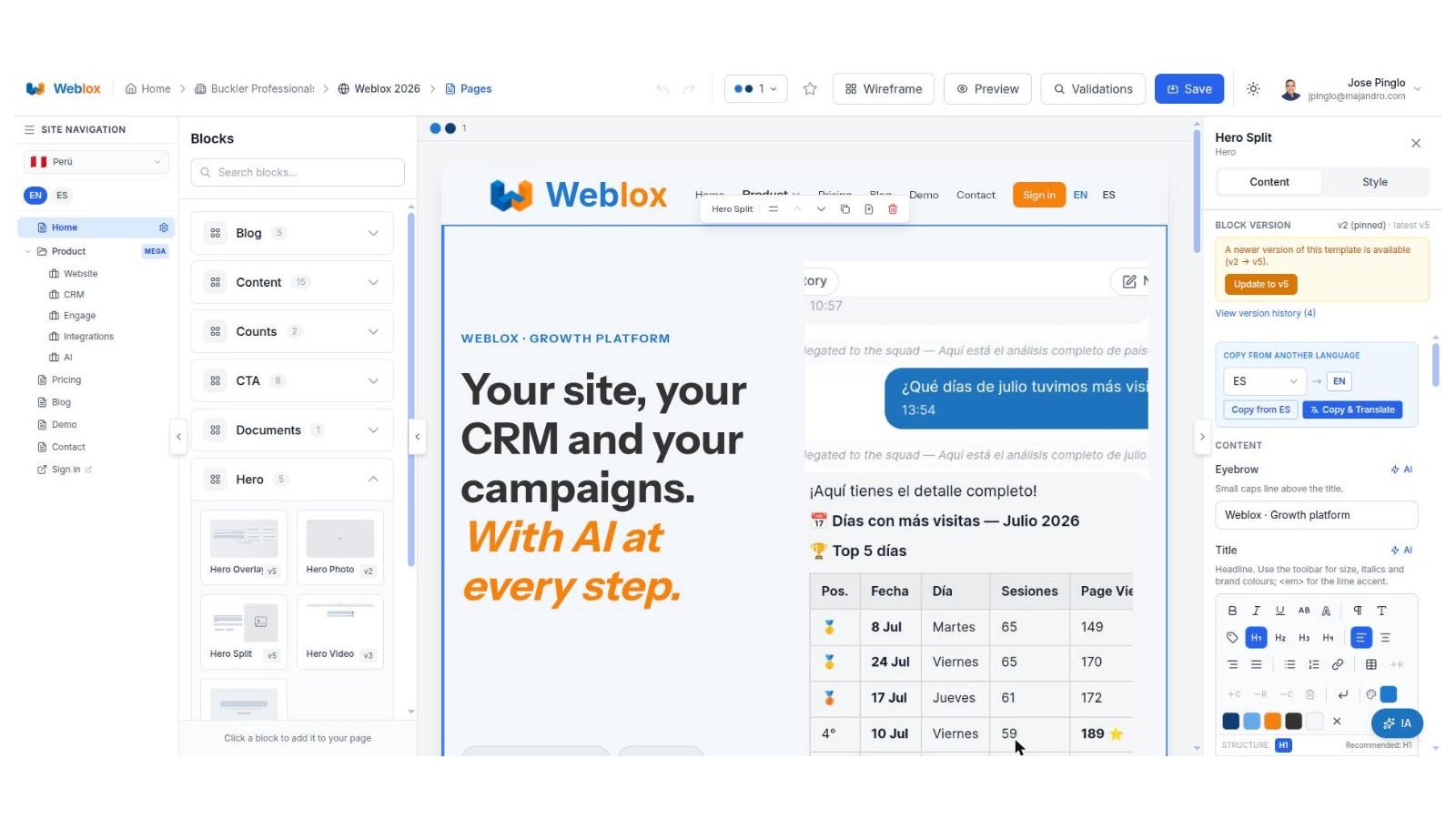
Block-based page builder
2 / 7
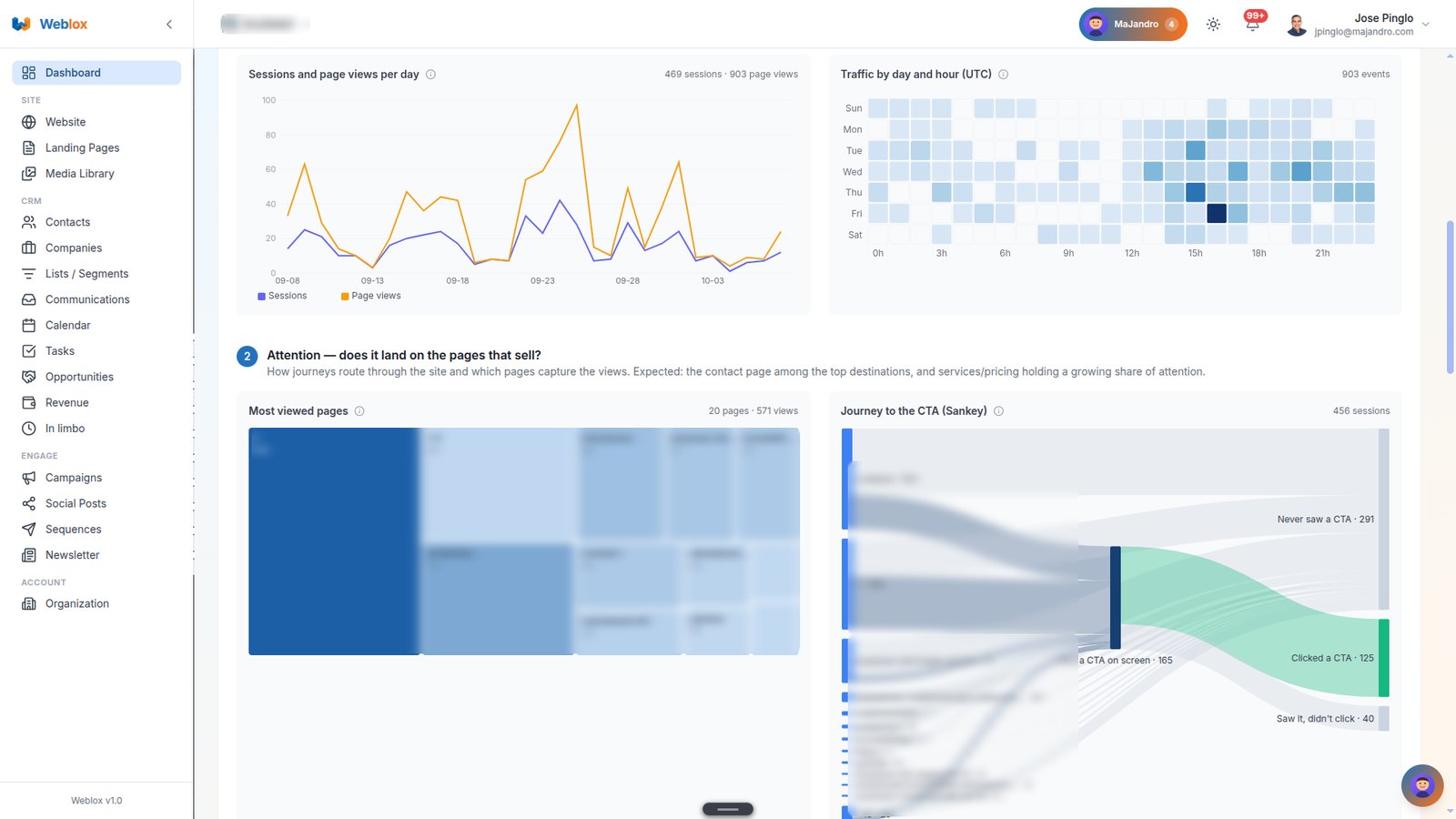
Built-in cookieless analytics
3 / 7
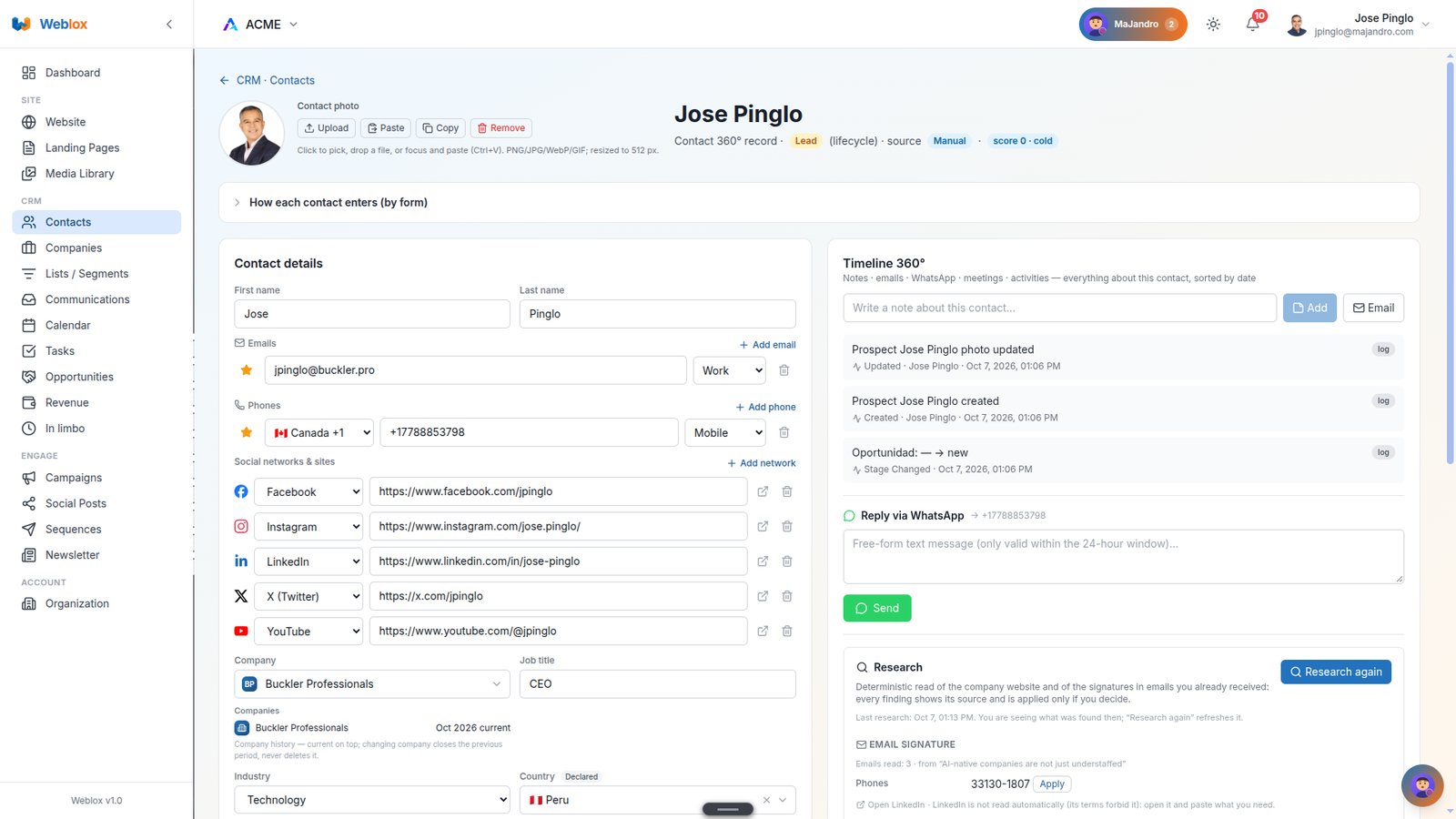
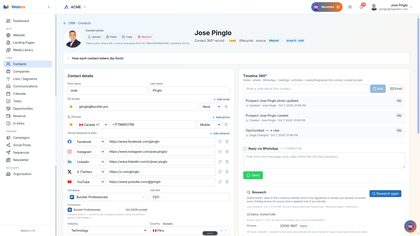
Contact 360°
4 / 7
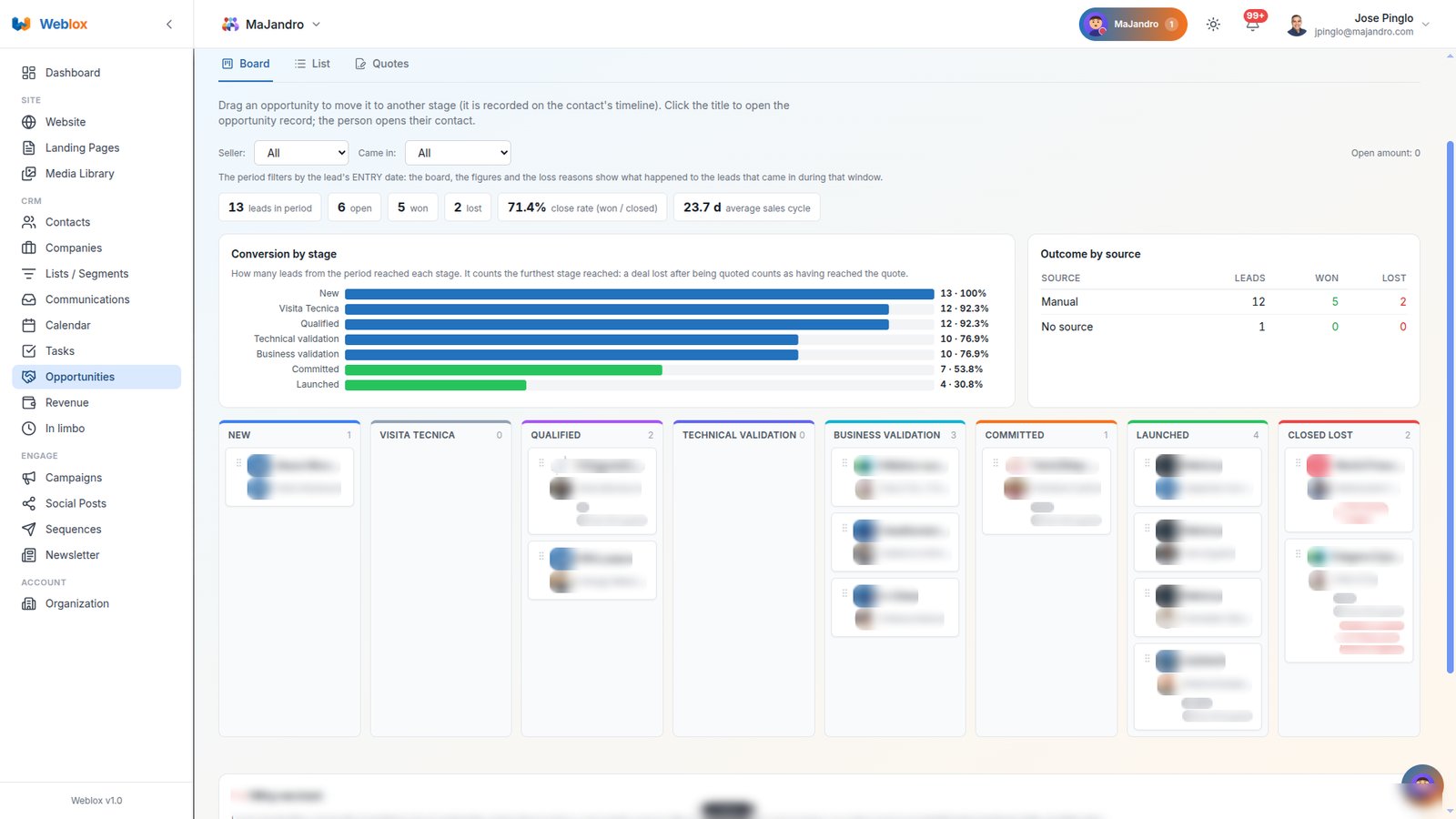
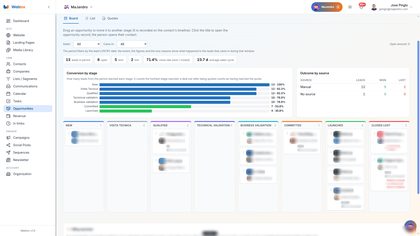
Opportunities board
5 / 7
Weblox on AWS
6 / 7
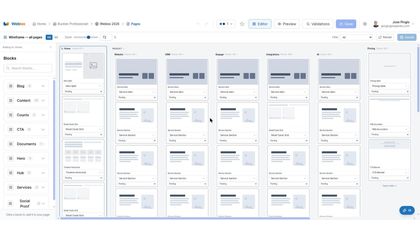
Wireframe board
7 / 7
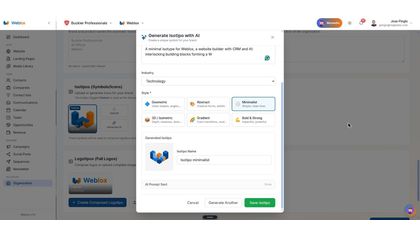
AI-generated isotype

Block-based page builder — every page is assembled from typed, versioned blocks; each block stays pinned to its version until its owner updates it, with AI on every field and copy-and-translate between languages.
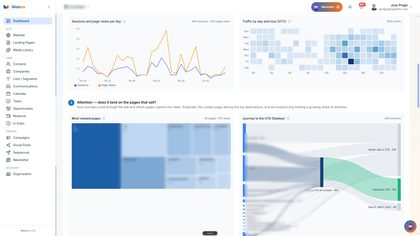
Built-in cookieless analytics — sessions, traffic by hour, the pages that hold attention, and how journeys reach the call to action.
Contact 360° — every note, email, WhatsApp message, meeting and stage change for one person on a single timeline.
Opportunities board — deals move through stages while conversion by stage, close rate and average sales cycle are computed from the same records.
Weblox on AWS — how a request flows, where the data lives and how it is deployed.
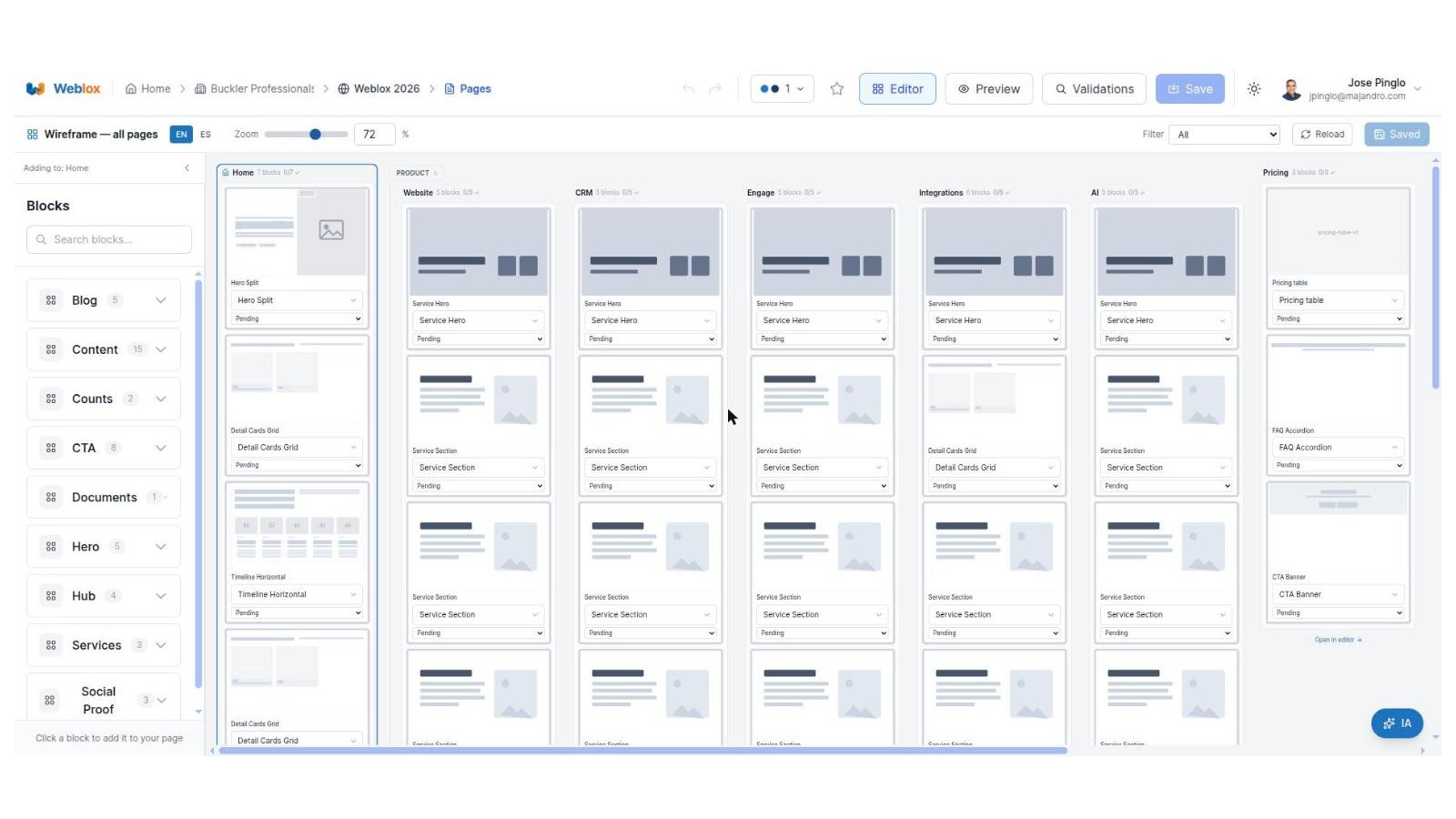
Wireframe board — every page an agent proposes, block by block, waiting for a person to approve it before anything is published.
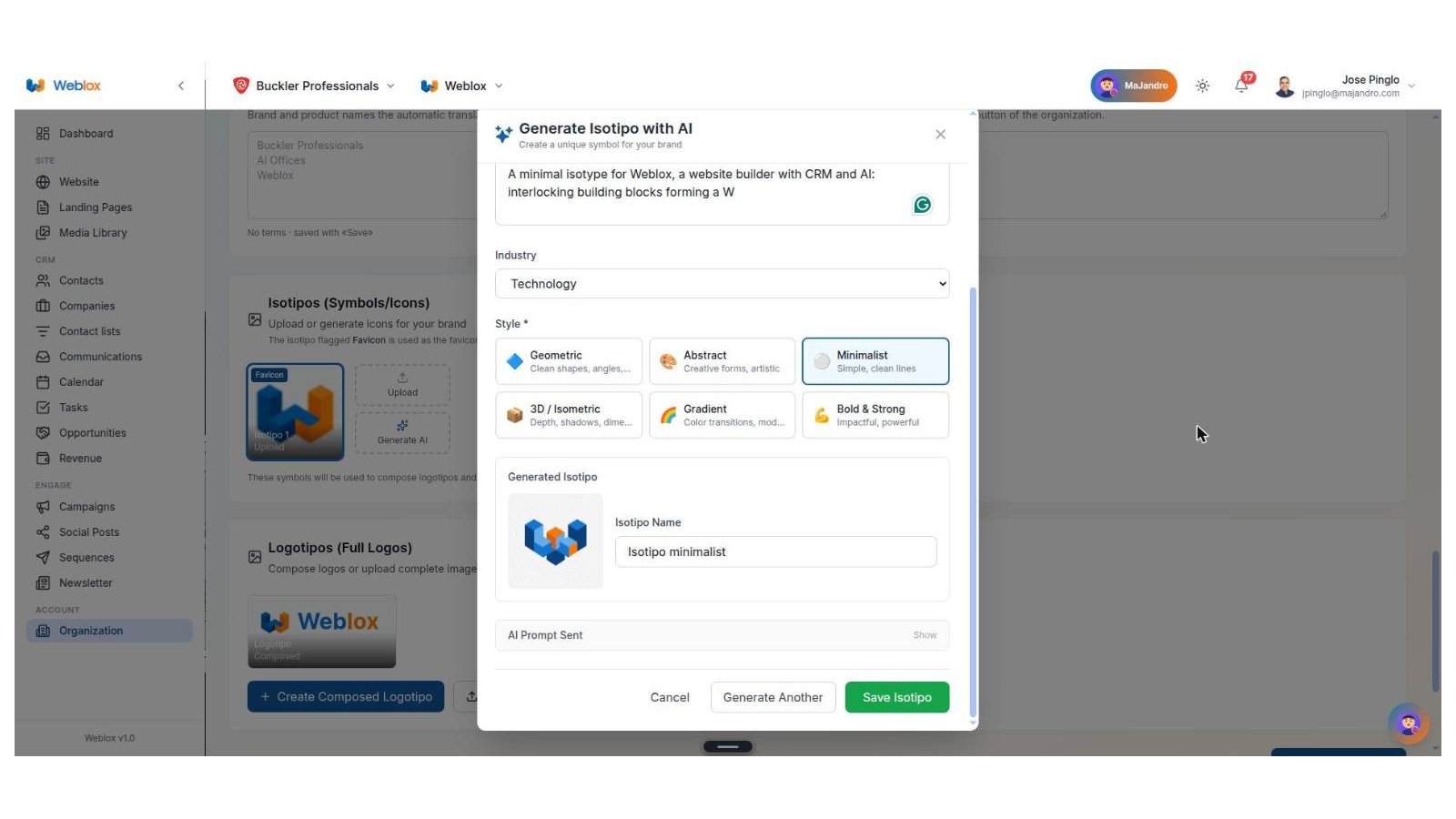
AI-generated isotype — the Brand agent proposes a symbol from the brand's own colours and a short brief; a person saves it or asks for another.

Client names, contacts and figures are redacted.